CSMART Room Service
“Order, we deliver.” A hotel has a kitchen; a holiday residence has a village around it. CSMART Room Service turns the resort's shops and providers into room service — without the property having to run stock, a kitchen brigade or a licence.
The shopfront runs by itself
On the unit's TV, three panels rotate: who delivers right now, today's selection, village services. Opening hours are real: a closed business greys out, one opening soon shows its time. The QR code already recognises the unit — nothing to type, no account to create.
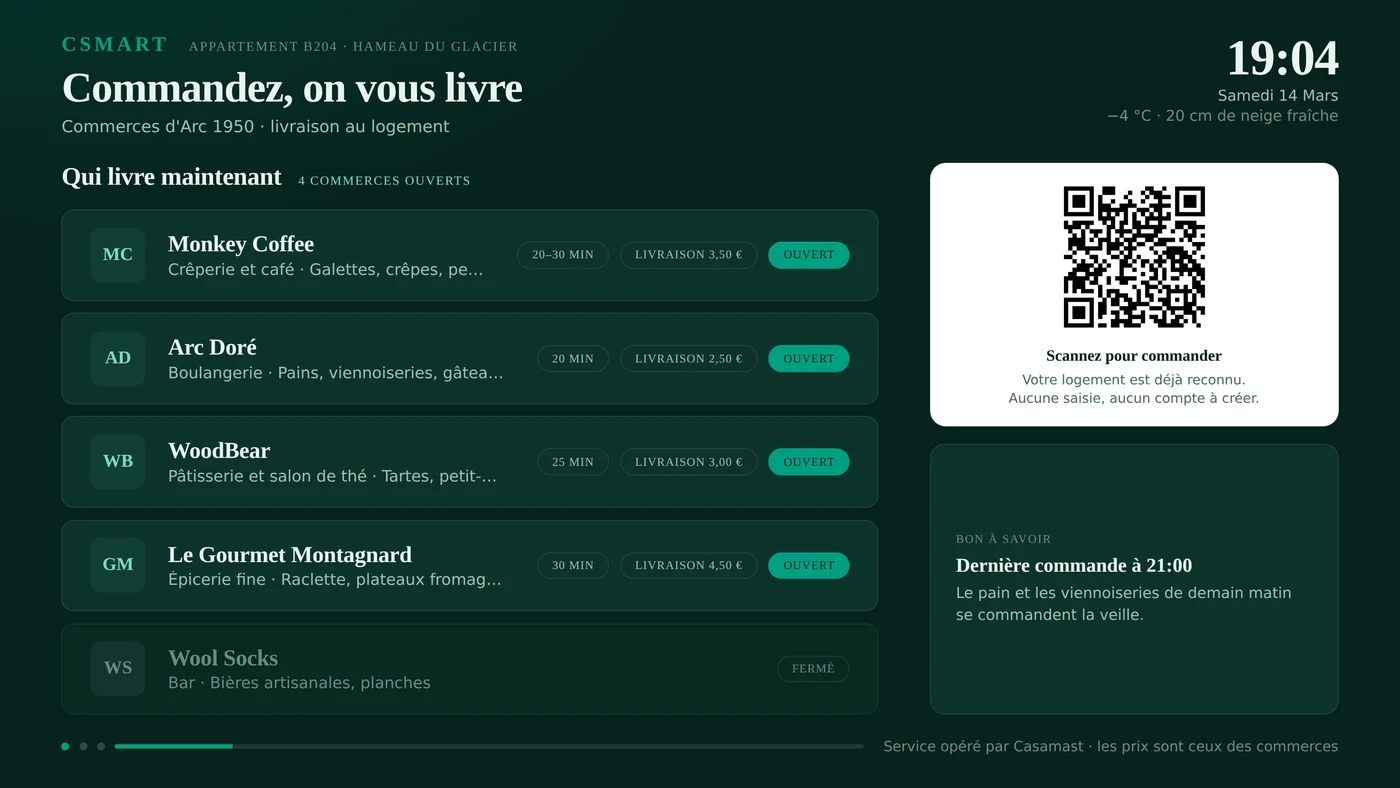
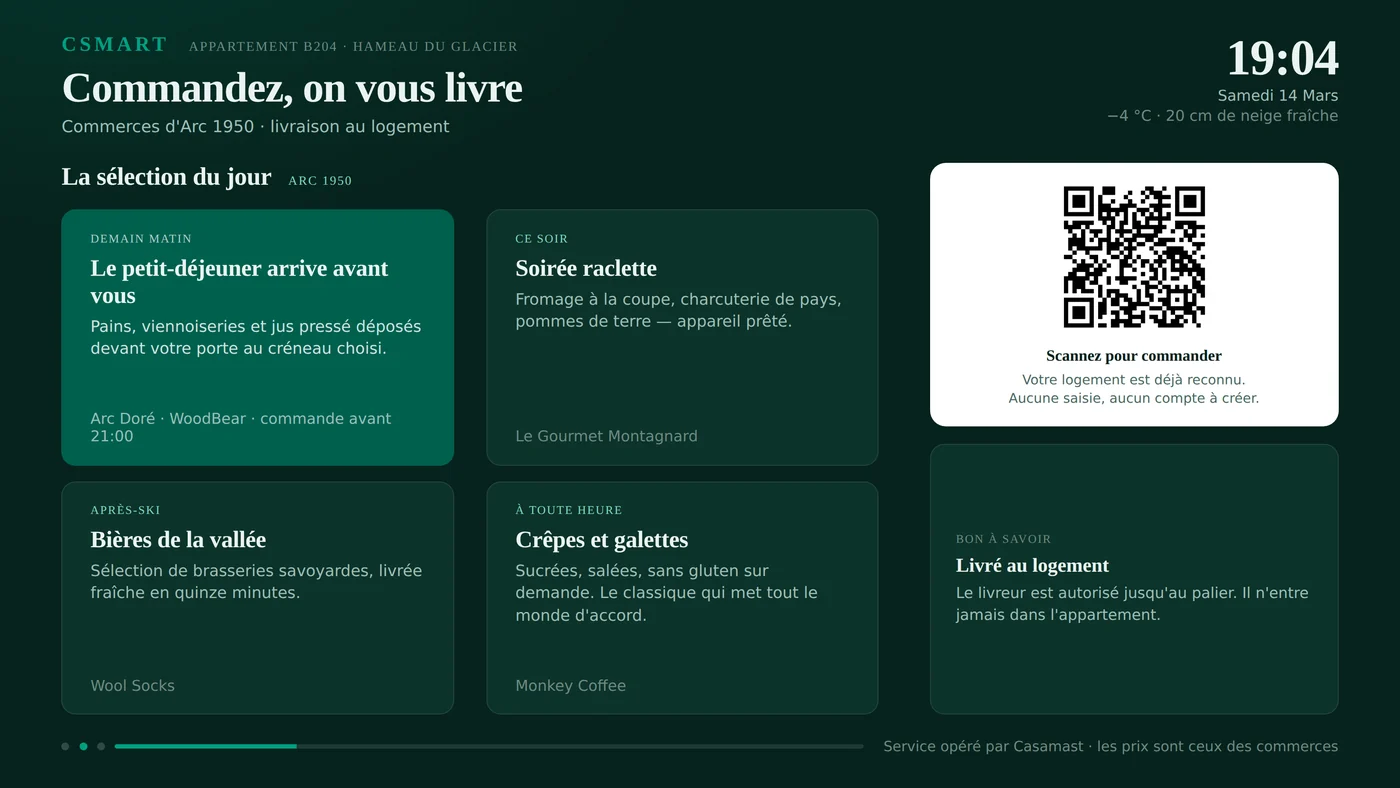
Working mockups. The businesses shown are those of Arc 1950, where the solution is deployed.
One service, three applications
The hard part of a delivery service is not the guest side: it is the shopkeeper mid-service, and the courier outside in the cold wearing gloves.
The guest
From the TV by QR code, or from CSMART Mobile. Catalogue with images and prices, basket, delivery slot, secure payment.
- The unit is recognised, nothing to type
- Live order tracking
- Delivery instructions shown to the courier
The shopkeeper
An app designed to be used during service: accept in one tap, mark an item out of stock straight from the list, close orders at the end of service.
- Catalogue, prices inclusive of VAT, promotions
- Capacity-based slots that close themselves when full
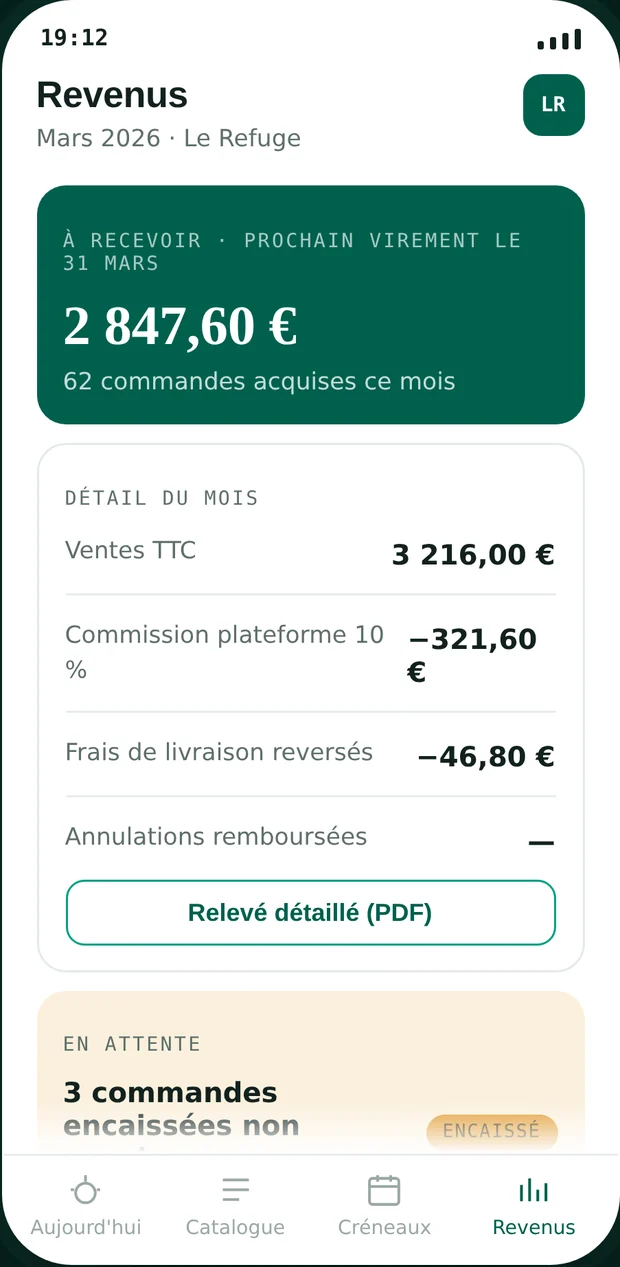
- Revenue: collected, earned, next payout
The courier
One job at a time, in large type. The route, the destination, and the access that opens exactly when needed — not before.
- Four-stage bar: collected, en route, on site, handed over
- Hall and lift access, valid for 20 minutes
- Authorised as far as the landing, never inside the unit
Built to be used one-handed, mid-service
A restaurateur in the middle of service does not fill in a ten-field form. That principle drove the whole supplier application.
The availability switch sits on the catalogue row, not deep in a record: marking an item out of stock is the most frequent action of a service, and it must never cost three taps. Prices are entered inclusive of VAT — as they are displayed — and the net figure is computed under the field.
Slots are not managed as opening hours but as production capacity: four orders per slot, and the slot closes itself on the guest side once it is full.
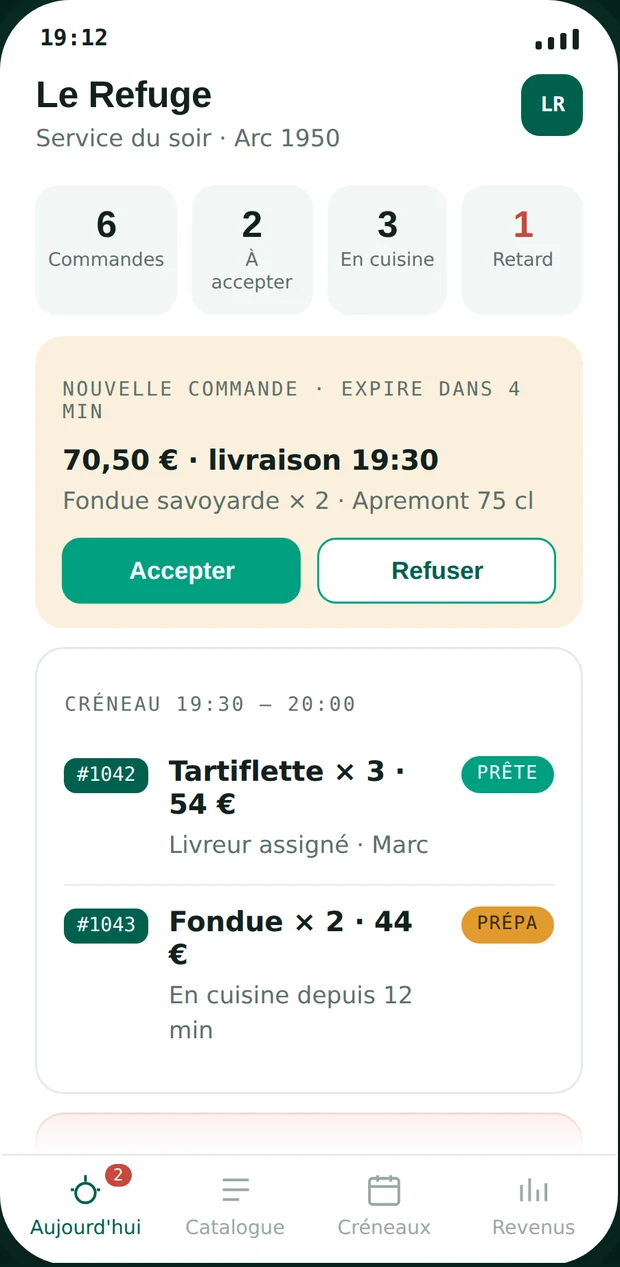
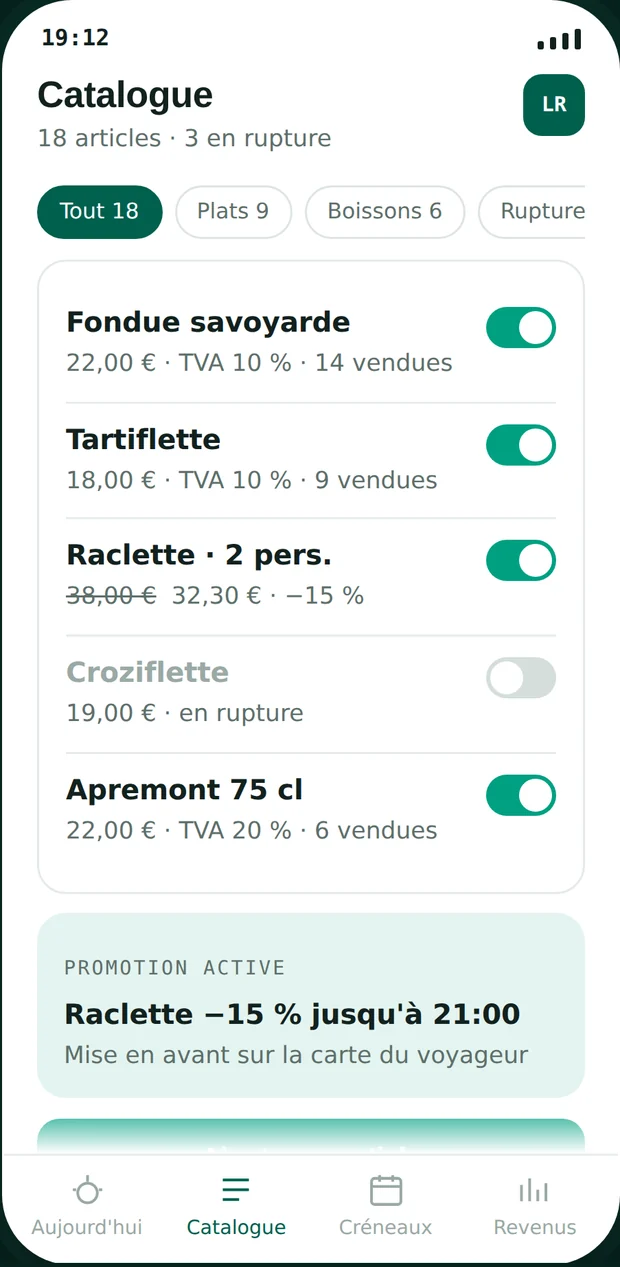
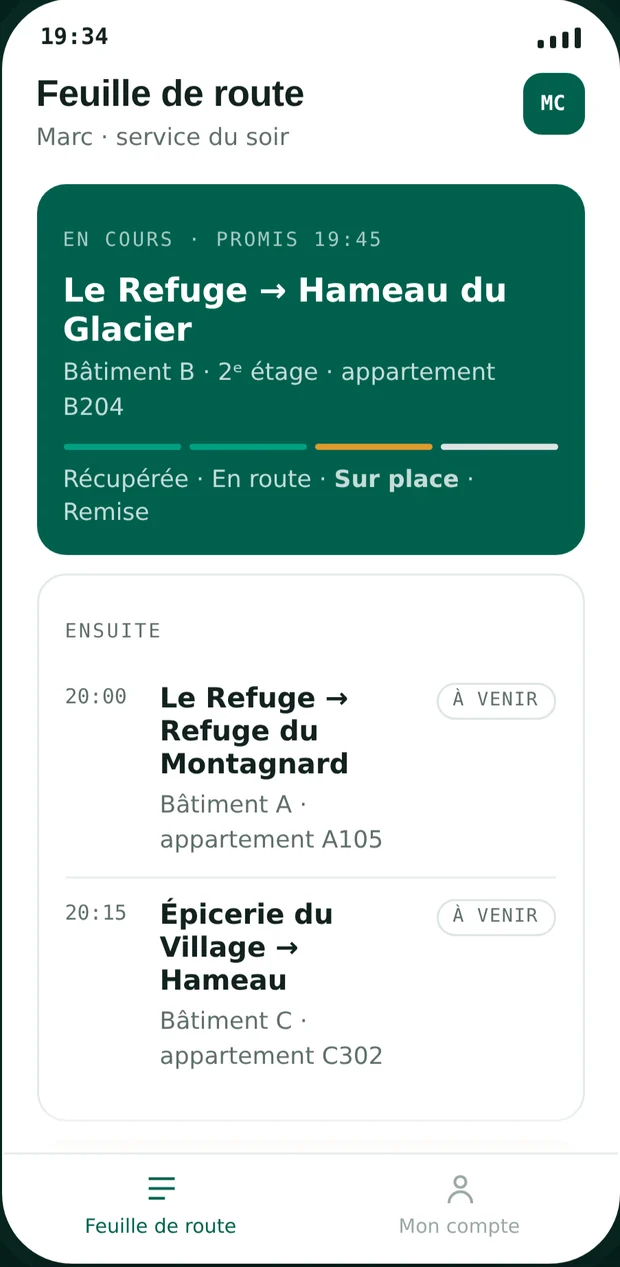
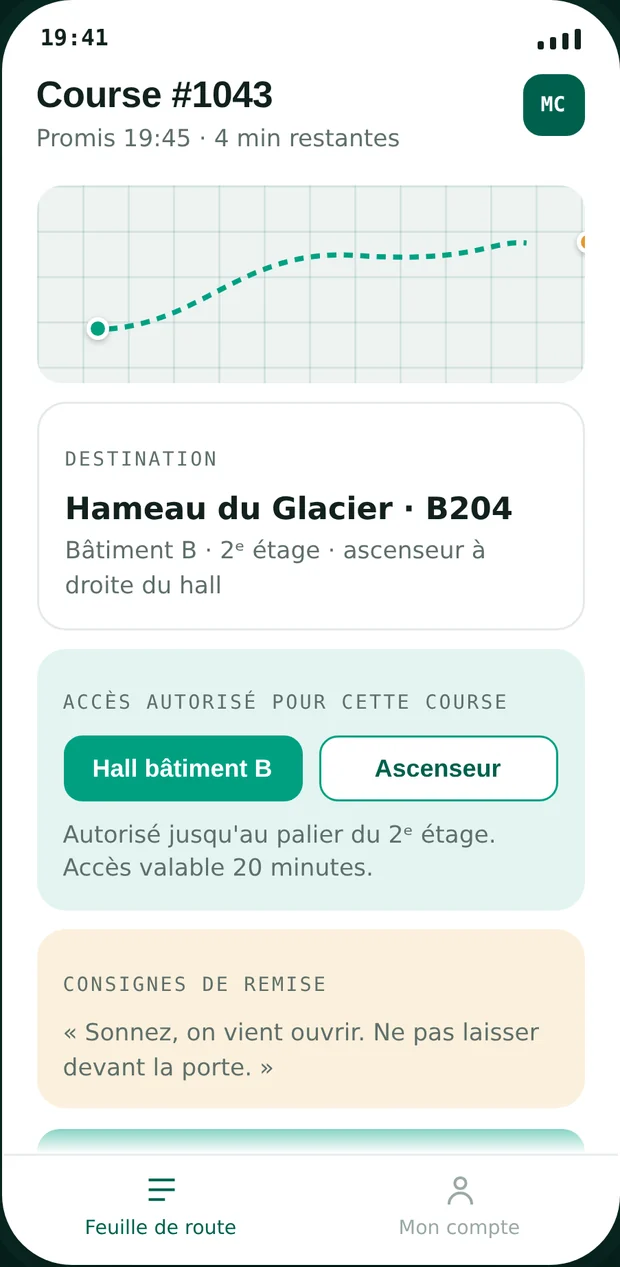
Access opens for one job, and for twenty minutes
This is where CSMART Room Service departs from a conventional delivery platform: the courier does not hold a building code circulating in a chat group. For the current job only, they receive access to the hall and the lift — valid for twenty minutes.
The perimeter is set by the residence, not by the guest or the shop. Hall, landing or unit door: that is a co-ownership decision, and it can differ from one building to the next.
Upcoming jobs show only their destination. Order contents appear only once the job is picked up.
Revenue, without stock or kitchen staff
The property does not sell food: it operates a marketplace between its occupants and the businesses around it. The model rests on a platform commission, and the service starts without hiring.
Collected is not earned
The distinction sits at the heart of the scheme and is visible in the supplier app: the platform collects when the order is placed, but the amount only becomes due to the shopkeeper once the service is delivered.
The shopkeeper's statement therefore shows three separate figures — gross sales, platform commission, delivery fees passed on — with amounts pending fulfilment listed apart. That is what makes the relationship sustainable.
Frequently asked questions
Do we need to hire couriers?
It depends on the setup. The courier can be a concierge employee, a village provider, or the shop itself where it already delivers. The app is the same in all three cases; only the affiliation changes.
How are businesses recruited?
That is the real start-up work, and it is local: convincing resort shopkeepers one by one, showing them the app and guaranteeing payment terms. At Arc 1950, around twenty businesses are listed.
Does the courier enter the unit?
No. Access is authorised as far as the landing, and the guest can add handover instructions — ring the bell, do not leave outside the door. The exact perimeter is agreed with the co-ownership.
What if a business is closed or out of stock?
The TV screen and the app reflect it in real time: a closed business greys out, an out-of-stock item disappears from the catalogue. The shopkeeper controls it from their phone, in one tap.
Let's talk about your property.
Thirty minutes is usually enough to scope a project: the guest journey you want, operating constraints, regulatory deadlines and a realistic order of magnitude for the payback. Two showhomes are open to visit, in La Londe-les-Maures and Les Arcs.